 how-to
How to Identify Handmade Pasta: A Practical Guide
Quick Summary
Handmade pasta is shaped by hand or with simple tools from flour, eggs or water, and salt, rather than long-run factory extrusion. Look for uneven thickness, irregular shapes, ragged edges and flour ghosting, then confirm by asking how it was made.
- Look for uneven thickness, with a faint gradient across a hand-rolled sheet.
- Line up three or four pieces; matching widths to the millimeter suggest a machine.
- Handmade fresh pasta is usually cut with ragged or compressed edges, not clean, glassy ones.
- Score several clues together, since no single one proves handmade pasta.
- Ask whether the pasta is made in-house and how often it is made.
Table of Contents
- How to Identify Handmade Pasta: A Practical Guide
- Why Handmade Pasta Is Hard to Spot
- A Visual Checklist for Spotting Handmade Pasta
- Handmade Pasta Shapes and What Their Signs Look Like
- Fresh Pasta vs. Dried Pasta: What the Difference Tells You
- How to Tell If Pasta Is High Quality
- How Long to Cook Homemade Pasta and How to Check Doneness
- Questions to Ask Before You Order Handmade Pasta at a Restaurant
- Frequently Asked Questions
How to Identify Handmade Pasta: A Practical Guide
Last Updated: November 8, 2026
Why Handmade Pasta Is Hard to Spot
Handmade pasta is a common question for restaurant guests: how can you tell? A dish that looks rustic on the plate can come from a machine, and a plate that looks polished can be handmade. Looks alone rarely settle it.
That is why this guide focuses on clues you can check yourself. It covers what to look for on the plate, how fresh and dried pasta differ, and what to ask before you order at a restaurant.
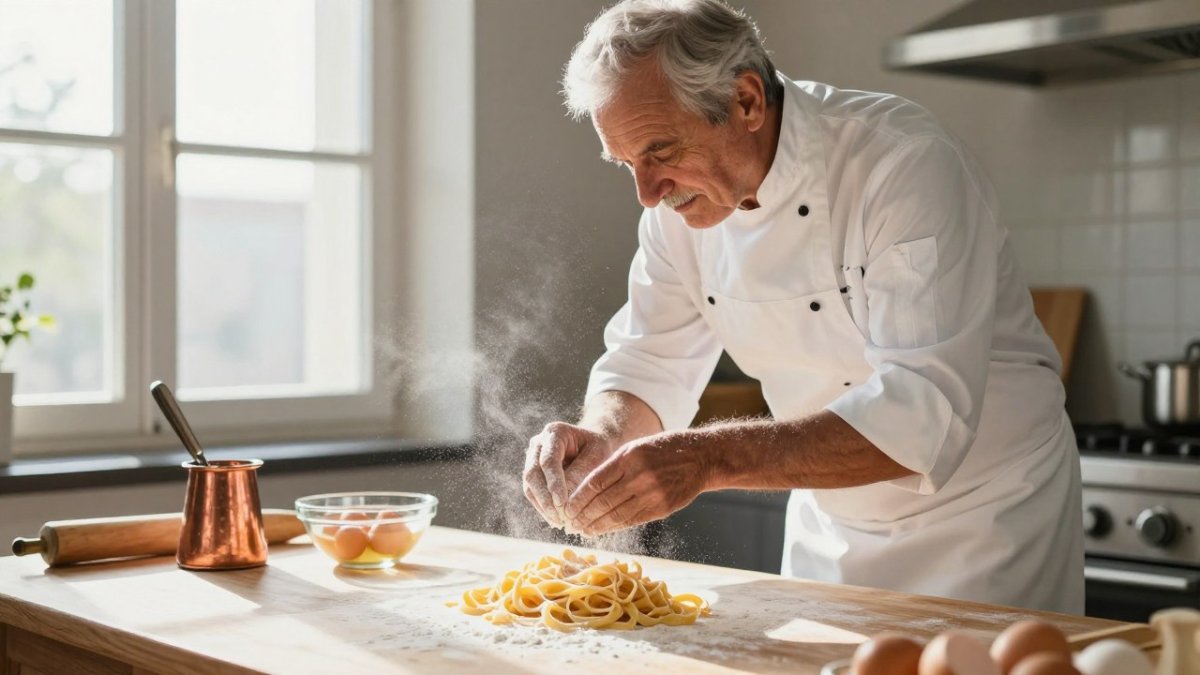
Handmade pasta is pasta shaped by hand or by slow, simple tools, usually from flour, eggs or water, and salt, with no long-run factory extrusion.
Many guests assume that a rough surface always means handmade. It doesn't. Some commercial pasta is extruded through bronze dies to create a rough texture, and some handmade dough comes out quite smooth. Treat any single clue as a hint, not proof.
A Visual Checklist for Spotting Handmade Pasta
Use this checklist when you are looking at raw or cooked pasta. Each item is a clue, not proof. The skill is in reading several clues together and knowing which ones cancel each other out.
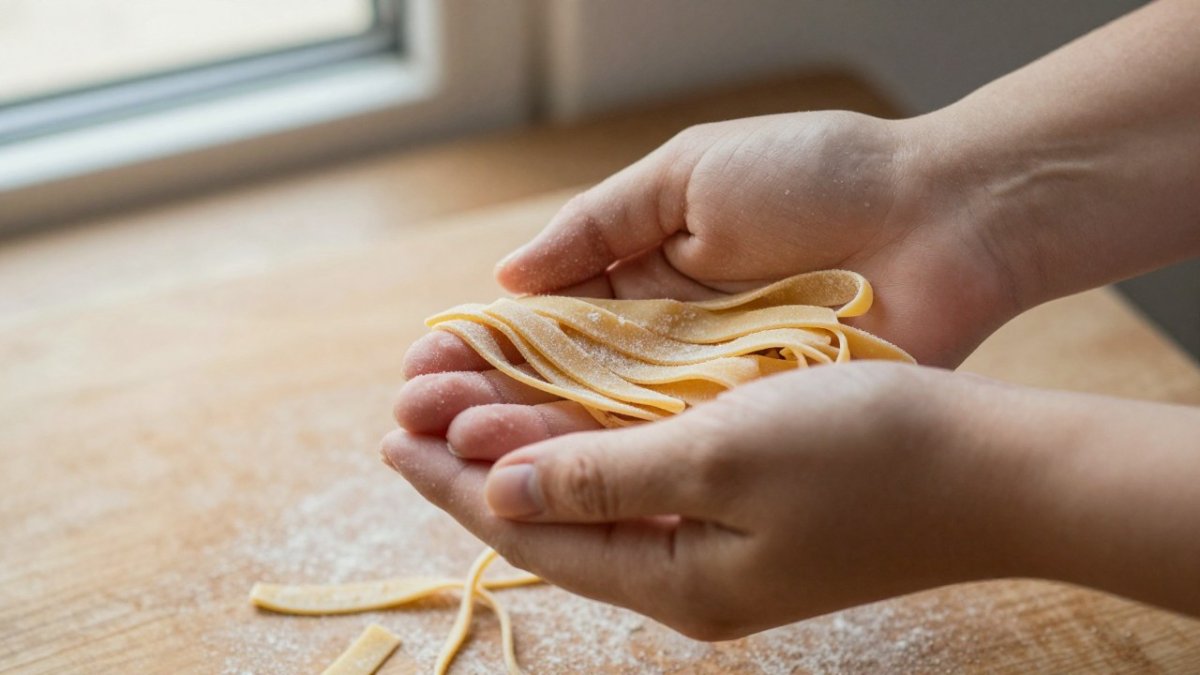
Inspect the raw pasta first, if you can.
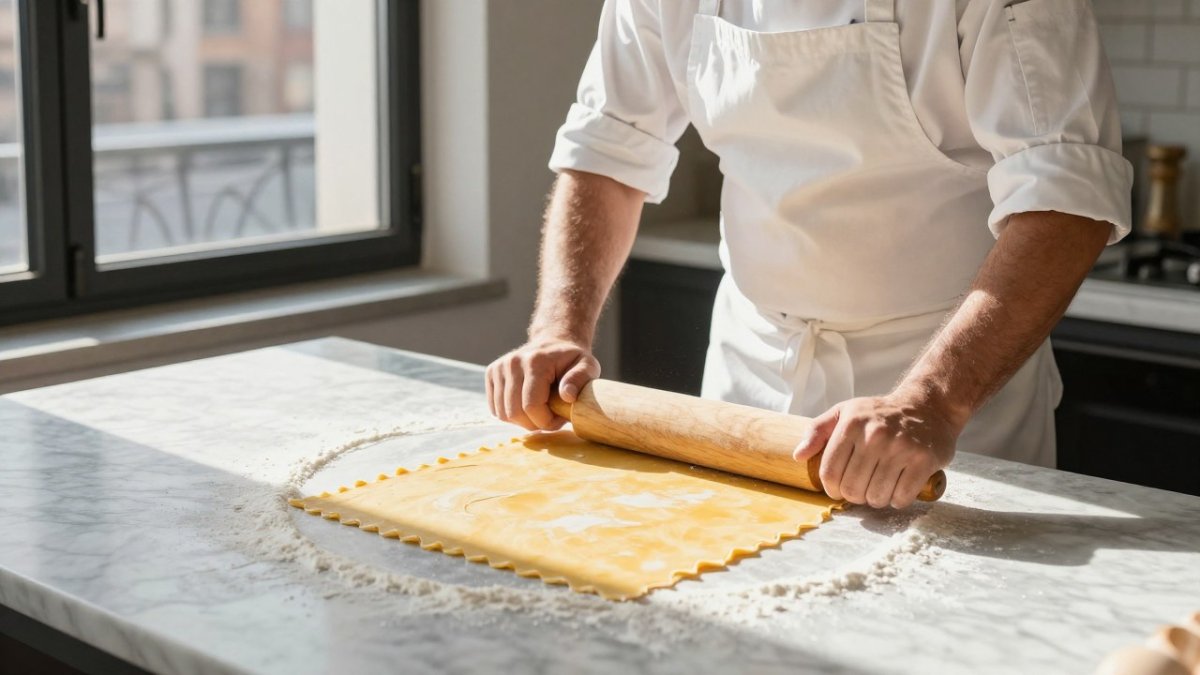
- Uneven thickness: Hand-rolled sheets taper slightly from center to edge because a rolling pin applies uneven pressure. Hold a strand up to the light; a hand-rolled sheet often shows a faint gradient, while a machine sheet is uniform.
- Irregular shapes: Hand-cut and hand-folded pieces are rarely identical. Line up three or four pieces side by side, if the widths, lengths, or fold angles match to the millimeter, suspect a cutter or extruder.
- Surface texture that varies across the piece: Handmade pasta often has patches that are smoother and patches that are rougher, because the dough was worked by hand and dusted unevenly with flour. A uniformly rough surface is more typical of bronze-die extrusion.
- Flour ghosting and uneven color: A faint dusting of flour in the folds, or slight color variation from egg yolk or semolina, points to hand work. Perfectly even color across every piece is more typical of industrial mixing.
- Edges: Hand-cut strands often have slightly ragged or compressed ends where the knife or wheel passed through. Clean, sealed, glassy edges suggest a machine cut.
- Seams on filled shapes: On ravioli and similar shapes, hand-sealed edges are rarely identical from piece to piece, and you may see a slight thickness difference between the seam and the body. Machine-sealed edges are uniform and often show a crimp pattern.
Then check the cooked plate.
- Cooked texture at the edge versus the center: Handmade pasta often cooks slightly unevenly because the thickness varies, so the edge may be a touch softer than the center. Perfectly uniform doneness across every strand is a machine signature.
- Surface after saucing: A handmade surface tends to grab sauce in an irregular pattern, with some spots glossier than others. A uniform coating can happen on any pasta, so treat this as a weak clue.
- How it behaves when twirled: Hand-rolled strands sometimes kink or twist slightly rather than lying flat, a residue of hand shaping.
How to weigh the clues. Score what you see rather than relying on one item. Three or more independent clues pointing the same way is meaningful; one clue is not. A rough surface plus uniform widths, for example, points to bronze-die machine pasta, not handmade. A smooth surface plus uneven widths and ragged edges points the other way.
Watch out: shape irregularity and roughness are clues, not proof. Some commercial pasta is deliberately extruded or cut to look rustic, and a skilled cook can produce remarkably uniform handmade pasta.
The table below summarises the main visual clues from the checklist and what each one suggests, so you can weigh them together.
| Clue | Suggests handmade | Suggests machine |
|---|---|---|
| Uneven thickness | Faint gradient across the sheet | Uniform thickness throughout |
| Irregular shapes | Widths and folds vary | Pieces match to the millimeter |
| Surface texture | Patchy, varies across the piece | Uniformly rough or uniformly smooth |
| Flour ghosting | Faint dusting in folds, uneven color | Perfectly even color on every piece |
| Edges | Ragged or compressed ends | Clean, sealed, glassy edges |
| Seams on filled shapes | Slight variation between pieces | Uniform crimp pattern |
| Cooked texture | Edge softer than center | Uniform doneness across strands |
Handmade Pasta Shapes and What Their Signs Look Like
Some shapes make handmade work easier to spot, while others hide it.
- Tagliatelle: Look for strands that vary slightly in width. Uniform widths suggest a machine.
- Orecchiette: Traditionally shaped by pressing and dragging dough with a knife. Hand-formed pieces are uneven in size.
- Cavatelli: Shaped by rolling small pieces of dough. Irregular curls are a good sign.
- Ravioli: Check the seams. Hand-sealed edges are rarely identical from one piece to the next.
- Gnocchi: Handmade gnocchi often show fork or thumb marks and slight variation in size.
Exceptions exist. Some machine-made shapes are designed to look rustic, so judge the whole plate, not one piece.
Fresh Pasta vs. Dried Pasta: What the Difference Tells You
Fresh pasta is made with eggs or water and is cooked soon after it is shaped. Dried pasta is dried for shelf storage, which lets it keep much longer. Handmade pasta is most often fresh, but dried handmade pasta exists too.
Fresh pasta usually cooks in a few minutes and feels tender. To see what authentic Neapolitan pasta looks like in practice, read which Neapolitan pasta in NYC is truly authentic. Dried pasta is firmer and holds its shape in heavier sauces. A soft, delicate strand is more likely to be fresh, but texture alone does not reveal how it was made. Ask the kitchen how the pasta is produced.
How to Tell If Pasta Is High Quality
Quality and handmade status are related but not the same question. A factory-made pasta can be high quality, and a poorly made handmade pasta can be disappointing. This section focuses on what a shopper can actually verify from a label, a package, or a market stall, the evidence competitors tend to skip.
Read the ingredient list closely.
- Short lists are common but not decisive. Flour, eggs or water, and salt are the usual components of fresh handmade pasta. A long list of stabilizers, acidity regulators, or added color tells you the product is built for shelf life, which usually means industrial production.
- Look at the order of ingredients. Ingredients are listed by weight. If eggs appear high on the list, the dough is likely egg-based; if water leads and eggs are absent, it is a water dough. Neither is better, but the answer tells you what kind of pasta you are buying.
- Semolina versus flour. Durum semolina is the standard for many dried pasta shapes; fresh egg pasta is often made with softer wheat flour. The label tells you which tradition the product follows, which in turn hints at how it was likely made.
- Beware of vague claims. Terms like "artisanal," "rustic," or "old-world" are marketing language, not regulated production claims. They do not by themselves indicate handmade pasta.
Check the production and storage clues.
- Shelf life is a strong signal. Fresh pasta sold refrigerated with a short use-by window is more likely to be made in small batches. A long ambient shelf life points to drying or pasteurization and industrial packaging.
- Storage conditions tell a story. Refrigerated or frozen fresh pasta suggests a fresher production chain; ambient boxes suggest dried product. Neither is inherently handmade, but the combination of short shelf life and refrigerated storage is more consistent with small-batch work.
- Production descriptions can help, up to a point. Phrases like "made in-house," "hand-rolled," or "cut by hand" are useful, but they are self-reported. Look for specifics: a named shape, a production day, or a stated method is more credible than a generic adjective.
- Country-of-origin and facility information can tell you whether the pasta was made in a large plant or a small kitchen, though it will not confirm handwork.
What labels cannot tell you. No label reliably proves handmade status. The most a label can do is make handmade production plausible or implausible. If the claim matters to you, ask the seller directly: who made it, when, and by what method. A specific, consistent answer is better evidence than any package wording.
Judge the eating quality separately. Once you have the production clues, taste the pasta. Good pasta holds a firm bite, keeps its shape in the pot, and gives sauce something to cling to. Those qualities matter regardless of whether the pasta was made by hand or by machine.
How Long to Cook Homemade Pasta and How to Check Doneness
Cooking time depends on thickness and whether the pasta is fresh or dried. Fresh homemade pasta often cooks in about two to four minutes. Dried pasta usually takes longer. Check the package or ask the cook.
To check doneness:
- Bite a piece from the middle of the pile.
- Look for a firm, springy center with no chalky core.
- Taste often near the end of the suggested time.
- Drain once it is tender with a slight bite.
Overcooked fresh pasta turns soft and breaks apart. Undercooked dried pasta feels hard and dry in the center.
Questions to Ask Before You Order Handmade Pasta at a Restaurant
Asking a few direct questions helps you find out whether pasta is truly handmade.
- Is the pasta made in-house? A clear yes is a good sign.
- How often is it made? Daily or same-day production suggests fresh handwork.
- Which shapes are hand-formed? Ask which dishes use hand-cut or hand-shaped pasta.
- Is the dough egg-based or water-based? Either can be handmade, but the answer shows how the kitchen works.
Ask about the menu before you arrive, or browse our menu to see which dishes feature our handmade pastas. When you are ready to plan your visit, you can reserve a table.
Frequently Asked Questions
What are some different types of handmade pasta?
Handmade pasta includes long, flat shapes such as tagliatelle and pappardelle, short shapes such as orecchiette and cavatelli, stuffed shapes such as ravioli, and dumpling-style shapes such as gnocchi. Many traditional Neapolitan and southern Italian shapes are shaped by hand, often with simple tools or just the fingers. Each shape has its own signs: orecchiette is cupped by a thumb, cavatelli has a curled, ridged form, and hand-rolled tagliatelle has slightly irregular widths. Knowing the typical shape helps you judge whether the pasta looks like it was made by hand.
How can you tell handmade pasta from machine-made pasta?
Look for irregularity. Handmade fresh pasta usually shows slight variation in thickness, width and shape, while machine-made pasta tends to be uniform. Check the surface: a rough, slightly porous texture holds sauce better than a glossy, smooth one, which often comes from extrusion through metal dies. Bronze-die extruded dried pasta also has a rougher surface, so texture alone is not conclusive. Ingredient lists help too: a short list of flour, eggs, water and salt points toward traditional production. Visual clues are useful but cannot prove how a pasta was made.
Does handmade pasta cook faster than dried pasta?
Usually, yes. Fresh handmade pasta is thin and moist, so it often cooks in 2 to 4 minutes in boiling salted water, while dried pasta commonly takes 8 to 12 minutes. Thickness, shape and dough hydration all change the time, so start checking early. Taste a piece at the shortest suggested time and drain it when it is tender with a slight bite.
How do you know when homemade pasta is cooked al dente?
Al dente pasta is tender throughout but still offers a slight resistance when bitten, with no chalky white core. Test a strand or piece from the thickest part of the batch, since thicker pieces take longer. Fresh pasta can go from underdone to soft quickly, so begin tasting well before the expected time. Drain it promptly and finish it in the sauce for a minute so it absorbs flavor.